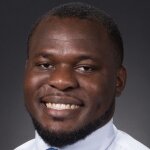
Ogaga Ojameruaye is a medical student at The University of Arizona College of Medicine – Phoenix. He completed his BS in physiology at The University of Arizona and completed his MS in psychology at Grand Canyon University. Ogaga is passionate about translational medicine, bench-to-bedside research, and the discovery of new diagnostic tools as they contribute to the model of precision medicine.
Musculoskeletal traumatic injuries are some of the leading causes of morbidity and disability worldwide. There is an increasing prevalence of post-traumatic and degenerative pathologies correlated to the subsequent surgical interventions. This is in no means an indictment of...
Read More
Psychological illnesses have serious clinical manifestations that can be debilitating. It has been known for a while now that endogenous derangements in the dopaminergic and serotonergic system contribute to the phenotypic manifestation of psychological illness, hence selective serotonin...
Read More
In continual efforts to improve diagnostic and screening methods, a new emerging tool that is quickly gaining momentum is the “specialized breathalyzer.” An instrument once utilized exclusively by law enforcement officers for the measurement of blood alcohol levels,...
Read More
CRISPR (clustered regularly interspaced short palindromic repeat)/Cas9 is a gene editing technique that utilizes a viral vector to insert segments of viral DNA to provide a template for RNA molecules that can be programmed to identify, disable, and...
Read More
The University of Arizona College of Medicine – Phoenix recently celebrated its 10th anniversary and with its 7th Match Day around the corner, the college has successfully graduated 273 physicians. As outstanding of an accomplishment that is, it...
Read More
A few years ago, the concept of nanoscience would have seemed so fictional that Steven Spielberg would have done an outstanding job curating it into a movie. Today, nanotechnology is making its way into clinical practice and soon...
Read More
The history of immunotherapy in tumor suppression dates back to the early 1900s when the pioneer of the field, Paul Ehrlich, in his study of antibody side chains suggested that molecules that react with tumors could play a...
Read More